
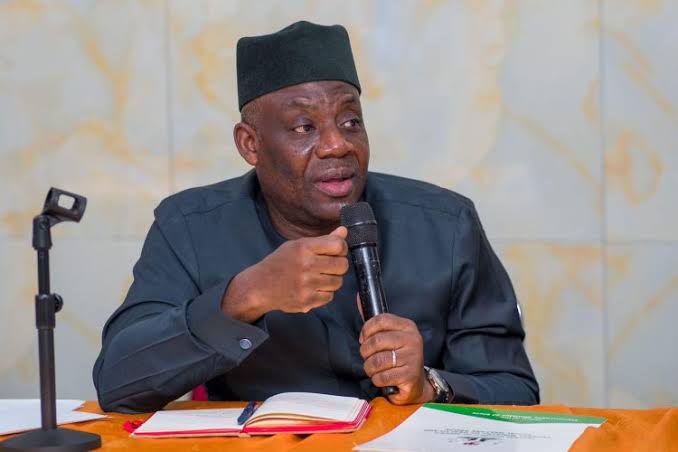
Mathematics no longer compulsory for Arts students seeking admission, Says FG
In a landmark decision that signals a significant shift in Nigeria’s education policy, the Federal Ministry of Education has announced that students in the Arts and Humanities disciplines will no longer be required to obtain a credit pass in Mathematics in their Senior School Certificate Examination (SSCE) as a prerequisite for admission into tertiary institutions across the country.
This new directive applies to admissions processed through both the West African Examinations Council (WAEC) and the National Examinations Council (NECO).
Until now, all admission seekers—regardless of their field of study—were required to secure a minimum of five credit passes, including English Language and Mathematics, to qualify for entry into universities, polytechnics, and colleges of education in Nigeria.
However, this long-standing rule has now been reviewed, with the Ministry stating that the decision aims to remove unnecessary academic barriers while still maintaining the integrity and quality of tertiary education in the country.
New Entry Guidelines for Nigerian Tertiary Institutions
The announcement was contained in a circular released on Tuesday by the Federal Ministry of Education, titled “Revised National Guidelines for Entry Requirements into Nigerian Tertiary Institutions.”
According to the statement, the new framework is designed to provide a more flexible, inclusive, and discipline-sensitive entry structure for students across different academic fields.
It reads in part:
“The revised National Guidelines for Entry Requirements into Nigerian Tertiary Institutions are designed to remove barriers while maintaining academic standards. This new framework aligns entry requirements with the realities of each discipline, ensuring that students are not unfairly restricted from accessing higher education opportunities.”
The circular further detailed the new subject requirements for each category of tertiary institutions as follows:
1. Universities
-
A minimum of five (5) credit passes in relevant subjects, including English Language, obtained in not more than two sittings.
-
Mathematics remains compulsory for candidates applying to Science, Technology, and Social Science programs.
-
However, Mathematics is no longer mandatory for candidates seeking admission into Arts and Humanities disciplines.
2. Polytechnics (National Diploma Level)
-
A minimum of four (4) credit passes in relevant subjects, including English Language for non-science courses and Mathematics for science-related programs.
3. Polytechnics (Higher National Diploma Level)
-
A minimum of five (5) credit passes in relevant subjects, including English Language and Mathematics, to maintain the professional and technical nature of the qualification.
4. Colleges of Education (NCE Level)
-
A minimum of four (4) credit passes in relevant subjects.
-
English Language remains compulsory for Arts and Social Science courses, while Mathematics is required for Science, Vocational, and Technical programs.
The statement was signed by Folasade Boriowo, the spokesperson for the Federal Ministry of Education.
Rationale Behind the Reform
Speaking on the policy update, the Minister of Education, Dr. Tunji Alausa, explained that the reform aligns with the government’s ongoing effort to expand access to higher education and eliminate unnecessary bottlenecks that have for years hindered thousands of qualified candidates from securing admission.
“This policy is a step toward fairness and accessibility,” Dr. Alausa said. “Our goal is to ensure that every Nigerian student has a genuine opportunity to pursue higher education in their chosen field without being limited by subjects that are not directly relevant to their discipline.”
The minister also emphasized that the new guideline was developed after wide consultations with education boards, regulatory agencies, and academic experts. It will take effect immediately and apply to the next round of tertiary admissions.
Public Reaction and Expert Opinions
The reform has sparked widespread conversation among education stakeholders, students, and parents across the country.
Education analyst Ayodamola Oluwatoyin praised the policy, describing it as a bold and progressive move that will increase inclusivity and reduce academic pressure on students pursuing non-scientific fields.
“This is a brilliant reform that will open doors for many students who have struggled with Mathematics but excel in other areas such as Literature, History, Law, or Linguistics,” he said. “It reflects a deeper understanding of how education should serve individual strengths and career goals.”
Many parents and teachers also welcomed the decision, saying it reflects a more practical approach to learning, one that respects the diversity of academic interests among students.
Broader Implications for the Education Sector
The new policy is expected to have far-reaching implications for Nigeria’s tertiary education system. By relaxing the Mathematics requirement for arts-based disciplines, the Ministry hopes to:
-
Increase admission rates among qualified candidates.
-
Promote creativity and specialization in Arts and Humanities.
-
Reduce dropout and failure rates linked to Mathematics.
-
Encourage educational equity across diverse academic fields.
This reform also aligns with global trends, where universities in many countries structure entry requirements based on the relevance of each subject to a candidate’s intended course of study.
Conclusion
The Federal Ministry of Education’s decision marks a turning point in Nigeria’s academic admission policy, balancing flexibility with academic integrity. It provides relief for thousands of students who are passionate about the Arts and Humanities but have long been disadvantaged by the compulsory Mathematics barrier.
As Nigeria continues to reform its education system, this policy stands as a testament to the government’s commitment to ensuring inclusive, fair, and accessible education for all learners.

Join Our Community
Stay ahead with exclusive campus news, admission updates, scholarships and student opportunities.
You May Also Like
More


Be the first to comment