

ADAMAWA STATE UNIVERSITY ANNOUNCES ORIENTATION PROGRAMMES FOR NEWLY ADMITTED STUDENTS FOR 2025/2026 ACADEMIC SESSION

The University Management has officially sanctioned a comprehensive two-day orientation exercise, marking a pivotal moment in the transition of newly admitted students into the academic and social community. Designed to serve as a roadmap for the years ahead, this exercise is far more than a simple welcome ceremony; it is a strategic induction process that provides students with the essential tools, regulations, and institutional knowledge required to navigate their academic journey successfully. Orientation demystifies the complexities of campus life, bridging the gap between secondary education and the rigorous, independent environment of a higher institution.
Recognizing the immense value of this process, Management has graciously declared a lecture-free period specifically for all newly admitted students on both days of the exercise. This policy ensures that students can fully immerse themselves in the orientation without the pressure of missing foundational coursework. This decision underscores the institution’s commitment to holistic student development, acknowledging that a well-informed student—who understands their rights, responsibilities, and the resources at their disposal—is significantly more likely to achieve academic distinction and personal growth.
Strategic Schedule and Dual-Campus Mapping
To facilitate a seamless experience and ensure localized delivery of information, the orientation has been organized across the university’s two main campuses. Students are required to attend the session corresponding to the physical location of their respective faculties.
On Thursday, 12th February 2026, the orientation will focus on Faculties in Barde Campus. On the following day, Friday, 13th February 2026, the exercise will transition to the Boni Haruna Campus to cater to the faculties situated there. Both sessions are scheduled to commence at 10:00 am prompt. Students are advised to arrive at their designated venues at least 30 minutes early to secure seating and familiarize themselves with the environment.
Compulsory Attendance and the Accountability Protocol
Attendance at this orientation is strictly mandatory. This is not merely an administrative request but a formal requirement of admission. To enforce this, the university has implemented a rigorous dual-attendance protocol. A formal register will be opened at the beginning of the exercise to capture the entry of all participants, and a final sign-out register will be circulated at the conclusion.
This tracking system ensures that every student has been exposed to the critical briefings provided during the sessions. The orientation record is often a prerequisite for future administrative clearances, such as the issuance of student identity cards and departmental registration. Failure to appear in both the morning and afternoon registers may result in a student being flagged as “un-oriented,” potentially leading to administrative delays or the inability to access certain university services.
The Core Pillars of the Orientation Program
The two-day exercise is structured around several core pillars that are vital to student success and safety. By attending, fresh students will gain clarity on:
Academic Rigor and Regulations
The transition to university-level grading can be challenging. Orientation provides a detailed breakdown of the Credit Unit System and the calculation of Grade Point Averages (GPA). Students will learn about the implications of academic probation, the procedure for add/drop course forms, and the strict penalties associated with examination malpractice.
Student Welfare and Support Services
University life extends beyond the classroom. Briefings will introduce students to the University Health Centre, the Counseling and Human Development Unit, and the Student Affairs Division. Knowing how to access these resources early can be life-saving during times of academic stress or personal emergencies.
Safety, Security, and Conduct
In an environment as large as a multi-campus university, security is a shared responsibility. The University Security Division will provide essential tips on personal safety, the reporting of suspicious activities, and the university’s zero-tolerance policy toward cultism, drug abuse, and sexual harassment.
ICT and Digital Literacy
Modern university administration is heavily digitized. The orientation will include a walkthrough of the Student Portal, teaching freshers how to pay fees securely, register for courses, and access digital library resources.
Maximizing the Orientation Experience: Advice for Freshers
To get the most out of these two days, newly admitted students should approach the exercise with a proactive mindset:
-
Punctuality: Arriving before 10:00 am ensures you do not miss the opening keynote addresses, which often set the tone for the institution’s values.
-
Active Engagement: Use the Q&A segments to clarify any confusion regarding your department, faculty requirements, or campus facilities.
-
Documentation: Bring a dedicated notebook and pen. The amount of information shared—ranging from names of key administrative officers to portal navigation tips—is vast and easily forgotten.
-
Networking: Orientation is the first opportunity to meet peers from other departments and faculties. Building a diverse social network early on is a key factor in psychological adjustment.
Conclusion: Laying the Foundation for Excellence
The University Management looks forward to welcoming the newest members of the academic community at both the Barde and Boni Haruna campuses. This orientation exercise is the final bridge between your admission and your identity as a full-fledged student of this institution. By participating fully, you are not only complying with a mandatory directive but are also protecting your future by equipping yourself with the knowledge needed to thrive in a competitive academic environment.
Welcome to a community dedicated to character, learning, and service. We wish you a productive and enlightening orientation experience.

Join Our Community
Stay connected with the latest updates, exclusive content, and be part of our growing community!
Latest Posts
View AllOSUN STATE COLLEGE OF HEALTH TECHNOLOGY SCHEDULES NYSC PRE-MOBILIZATION BRIEFING FOR HND STUDENTS

The transition from a Higher National Diploma (HND) candidate to a participant in the National Youth Service Corps (NYSC) is one of the most significant milestones in the life of a Nigerian graduate. Recognizing the complexities involved in this transition, the Management has officially scheduled a comprehensive Pre-Mobilization Briefing for all prospective corps members. This briefing is designed to serve as an authoritative guide, providing students with the technical knowledge and administrative clarity required to navigate the federal mobilization process without hitches.
National service is more than a civic duty; it is a legal requirement for employment in both the public and private sectors in Nigeria. However, the path from the classroom to the orientation camp is paved with rigorous documentation, data synchronization, and strict deadlines. The upcoming session is, therefore, the most critical preparatory event for students nearing the completion of their studies.
Schedule and Mandatory Participation
The management has designated a specific time and venue for this exercise to ensure maximum reach and effective communication.
Date: Wednesday, February 18, 2026
Venue: Owamiran Hall
Time: 10:00 am Prompt
It is imperative to note that attendance is strictly mandatory for all HND I and HND II students. While HND II students are the immediate beneficiaries of the mobilization exercise, the inclusion of HND I students is a proactive measure. By attending now, HND I students will gain an early understanding of the documentation they must maintain and the academic standards they must uphold to ensure their eventual mobilization is seamless. The Management warns that attendance will be recorded, and any student absent without a documented and approved medical or administrative reason may face significant delays in their mobilization.
Understanding the NYSC Mobilization Lifecycle
The briefing at Owamiran Hall will provide a step-by-step breakdown of the NYSC “Mobilization Lifecycle.” This process begins long before a student leaves the campus and continues until they receive their posting to a state of service.
1. The Senate/Academic Board Approved List
The foundation of mobilization is the “Senate List” (or Academic Board list for Polytechnics). This is the official document uploaded by the institution to the NYSC portal containing the names of all qualified graduates. The briefing will explain how students can verify if their names have been correctly uploaded and what to do if they find discrepancies in their data.
2. Online Registration and Biometrics
The NYSC has moved to a fully digital registration system. During the briefing, officials will discuss the importance of biometric verification. Students must understand that their thumbprints act as their digital signature throughout the service year. Information will also be provided on how to handle the selection of “States of Origin” and “States Visited” to avoid being flagged by the system for inconsistency.
3. The “Green Card” and “Call-up Letter”
Many students are often confused by the terminology of the NYSC. The briefing will clarify that the Green Card is the summary of your online registration, which must be printed and signed, while the Call-up Letter is the final document that reveals your State of Deployment and the date you are expected to report to the orientation camp.
Critical Documentation and Data Reconciliation
One of the primary reasons students fail to be mobilized with their peers is the issue of “Data Mismatch.” This occurs when information on one official document does not align with another. The session on February 18th will focus heavily on reconciling these records.
JAMB Regularization and Admission Letters
The NYSC portal is directly integrated with the Joint Admissions and Matriculation Board (JAMB). If a student’s admission was not properly regularized or if their name on the JAMB portal differs from the institution’s records, the NYSC system will reject the mobilization request. Students will be taught how to check their “JAMB Matriculation List” status to ensure they are “mobilization-ready.”
O’Level Results and Date of Birth
The NYSC is particularly strict regarding the age of 30. Anyone who graduates at or above the age of 30 is issued a Certificate of Exemption rather than being deployed for active service. The briefing will address how the NYSC calculates age based on the date of birth provided during the first registration with JAMB or WAEC/NECO. Students will be cautioned that once a date of birth is submitted on the NYSC portal, it is virtually impossible to change.
The Consequences of Non-Attendance
The Management’s directive that this briefing is mandatory is not an empty threat. Failure to attend has real-world implications:
-
Inaccurate Registration: Students who miss the briefing often make avoidable errors during online registration, such as choosing the wrong “Course of Study,” which can lead to being sent back from the orientation camp.
-
Missing Deadlines: The NYSC operates on a very tight national calendar. The briefing will reveal the specific internal deadlines the school has set for data verification. Missing these internal deadlines means missing the entire service batch.
-
Legal and Professional Delays: For graduates in professional fields, the inability to serve (or receive an exemption) can delay professional licensing and the start of a career.
What to Bring to the Briefing
While this is an information session, students are advised to come prepared as if it were a formal administrative screening. Having your details at hand will allow you to ask specific, relevant questions during the Q&A session.
-
A Copy of Your JAMB Admission Letter: To verify your name sequence.
-
Student Identity Card: For attendance verification at the entrance of Owamiran Hall.
-
A Dedicated Notebook: To record the specific portal links, contact numbers for the Student Affairs NYSC desk, and the schedule for the next phases of mobilization.
-
Evidence of Regularization (if applicable): If you recently concluded a JAMB regularization process, bring the proof of payment or the indemnity form.
Preparing for Life in the Orientation Camp
Beyond the paperwork, the briefing will touch upon the physical and mental preparation for the 21-day orientation camp. Prospective corps members will receive advice on the mandatory Medical Certificate of Fitness. The NYSC only accepts certificates from Government or Military hospitals (General Hospitals, Federal Medical Centres, or University Teaching Hospitals). Detailed information on the required tests—including genotype, blood group, and chest X-rays—will be provided to ensure students do not present invalid medical documents.
Conclusion: Punctuality and Professionalism
The Office of Student Affairs remains committed to ensuring that every eligible HND graduate from this institution is successfully mobilized for national service. However, this success is a partnership between the administration and the student. By arriving at Owamiran Hall by 10:00 am on February 18th, you are taking the first proactive step toward your service year.
Punctuality is not merely a request; it is a test of the discipline required for the paramilitary nature of the NYSC. Ensure you are seated early, prepared to learn, and ready to secure your future as a proud member of the National Youth Service Corps.
Join Our Community
Stay connected with the latest updates, exclusive content, and be part of our growing community!
Latest Posts
View AllUNIVERSITY OF MAIDUGURI (UNIMAID) ISSUES IMPORTANT NOTICE TO STUDENTS IN NERD CLEARANCE REGISTRATION

The University of Maiduguri (UNIMAID) has officially announced a major shift toward digital record-keeping and academic verification. In a directive aimed at enhancing institutional transparency and streamlining future clearances, the university has integrated with the Nigerian Education Repository Databank (NERD).
The NERD portal is now fully operational, with all UNIMAID faculties and departments successfully mapped onto the system. This development is not merely a suggestion; it is a critical administrative requirement for eligible students. By uploading academic records to this central databank, students are essentially creating a “digital academic twin” that facilitates instant verification for employers, scholarship boards, and postgraduate admissions globally.
Understanding the NERD Ecosystem
The Nigerian Education Repository Databank (NERD) is a national initiative designed to consolidate academic records from all tertiary institutions in Nigeria into a secure, searchable, and verifiable digital ecosystem. For UNIMAID students, this means their academic journey—from matriculation to graduation—is backed by a government-standard digital repository.
Why NERD is Essential for UNIMAID Students
Historically, students faced significant delays during final clearance and the processing of transcripts. By participating in the NERD upload now, students are preemptively solving these issues.
-
Instant Verification: No more waiting weeks for a manual letter of verification to reach an employer.
-
Security: Centralized data reduces the risk of record loss due to physical damage or administrative errors.
-
National Integration: As part of the Federal Government’s digitalization drive, NERD acts as the ultimate “source of truth” for academic credentials in Nigeria.
The Registration and Upload Process
The university has emphasized that the registration process is fully online. There is no requirement for students to visit the Senate building or Faculty offices for this specific task. However, precision is required to ensure data integrity.
Step 1: Locate an Accredited NERD Digital Service Centre
While the portal is accessible from any device, the University of Maiduguri strongly advises students to utilize accredited cyber café operators. These centers have been trained on the specific data fields required by the databank.
-
Locate a Centre: Use the official lookup link: https://esmat.ned.gov.ng/ai/lookup_nerd
Step 2: Data Preparation
Before visiting a service center, students should have the following digital or physical documents ready:
-
Official Admission Letter (JAMB or University).
-
Current Semester Registration Forms.
-
Valid University Identity Card.
-
Relevant O’Level results and previous semester transcripts (where applicable).
Step 3: Online Upload and Verification
The cyber café operator will guide the student through the portal, ensuring that the student’s name, matriculation number, and faculty precisely match the University’s internal records. Discrepancies at this stage can lead to “verification failure” during graduation clearance.
Faculty and Departmental Mapping
A significant milestone mentioned in the University’s announcement is the successful creation of all faculties and departments on the portal. This means that whether you are in the College of Medical Sciences, the Faculty of Agriculture, or the Faculty of Engineering, your specific curriculum and department code are already recognized by the NERD system.
This mapping ensures that the data uploaded is categorized correctly. For instance, a student in the Department of Mechanical Engineering will have their data synced with the professional standards required for that field, making it easier for professional bodies to verify their academic standing later.
The Impact on Clearance and Future Registration
The University Management has been clear: Prompt compliance is mandatory. Failure to upload records to NERD will likely result in a “block” during the following phases:
-
Final Year Clearance: Students who are not on the NERD databank may find their names missing from the final Senate-approved graduation list.
-
NYSC Mobilization: The National Youth Service Corps increasingly relies on digital repositories to verify the eligibility of “Prospective Corps Members” (PCMs).
-
Transcript Processing: Future requests for transcripts will be processed much faster for students whose data is already archived in the national repository.
Strategic Advice for UNIMAID Students
Given the importance of this exercise, students should keep the following tips in mind:
-
Check for Accreditation: Do not use unaccredited “street-side” cafés for this upload. Use the lookup link provided by the university to find centers that have the official NERD Digital Service Centre status.
-
Verify Before Final Submission: Always ask the operator to let you review the entered data on the screen before they hit “Submit.” Once the data is uploaded to the national repository, correcting errors can be a lengthy administrative process.
-
Keep a Printout: After the upload, ensure you get a confirmation receipt or a printout of the submitted data. Keep this with your other vital university documents like your school fee receipts.
Conclusion: Embracing the Digital Transition
The University of Maiduguri is moving toward a paperless future. The integration with the Nigerian Education Repository Databank (NERD) is a proactive step that protects the interests of every student. By securing your academic records today, you are ensuring that your hard-earned degree remains verifiable and respected, both locally and internationally, for years to come.
As the management stated: “Please be guided accordingly.” Do not wait for the deadline to approach; locate an accredited center today and secure your digital academic identity.
Join Our Community
Stay connected with the latest updates, exclusive content, and be part of our growing community!
Latest Posts
View AllKANO STATE POLYTECHNIC RELEASES REGISTRATION STEPS FOR NEWLY ADMITTED STUDENTS FOR 2025/2026 ACADEMIC SESSION

The Management of Kano State Polytechnic, via the Central Administration’s Management Information System (MIS), has officially sanctioned the registration protocol for the 2025/2026 academic session.
This structured roadmap is designed to transition newly admitted students from “candidates” to “bonafide students.” For freshers, navigating a multi-campus institution can be daunting; however, by following this 11-step procedure, students can ensure their enrollment is legally and administratively sound.
The 11-Step Registration Protocol
The registration exercise officially commenced on Monday, 2nd February 2026. Students are expected to complete these steps in the precise order listed to avoid technical hitches in the MIS database.
Phase 1: Digital Acceptance and JAMB Compliance
-
Step 1: Portal Admission Status: Log in to your personal account on the Kano Poly Applicant Portal to formally “Accept” or “Reject” the provisional offer.
-
Step 2: Acceptance Fee: Once accepted, you must pay the Admission Acceptance Fee of ₦10,000.00. This payment is a prerequisite for printing your official Polytechnic Admission Letter.
-
Step 3: JAMB Integration: National Diploma (ND) students must log in to their JAMB CAPS account to accept the admission and print their JAMB Admission Letter. This is critical for future NYSC mobilization.
Phase 2: Departmental Screening and Union Dues
-
Step 4: Physical Screening: Visit your respective Department. Here, designated screening officers will verify your original credentials. Your admission letters must be signed and stamped at this stage.
-
Step 5: Union Dues: Proceed to the Kano Poly Microfinance Bank (located at the School of Management Studies) to pay the Union Dues of ₦1,500.00. Ensure you collect a teller/receipt as proof of payment.
Phase 3: Administrative Assessment and MIS Activation
-
Step 6: Student Affairs Clearance: Meet the Student Affairs Officer at your School for assessment. You must provide a dossier containing:
-
Screened Polytechnic & JAMB/NBTE Admission Letters.
-
Union Dues Teller.
-
Original credentials and passport photographs.
-
-
Step 7: MIS Activation: This is the “Digital Gatekeeper” step. Visit the MIS staff to have your student account activated. Without this, you cannot access the registration portal.
Phase 4: Final Fees and Documentation
-
Step 8: Central Registration Portal: Log in to kanopoly.safsrms.com to:
-
Pay the Central Registration Fee.
-
Pay Departmental Registration fees.
-
Print your Course Registration Form (CRF) and Student Examination Card.
-
-
Step 9: Library Registration: Visit the Library to register and obtain your Library Card.
-
Step 10: Bursary Authentication: Visit the Bursary Department at Central Administration for final payment authentication. This step verifies that all digital payments have successfully hit the university’s accounts.
-
Step 11: Final Documentation: Submit two (2) copies of all credentials and recent passports to your Department for their permanent records.
Strategic Deadlines and Requirements
| Requirement | Details |
| Admission Acceptance Fee | ₦10,000.00 |
| Union Dues | ₦1,500.00 |
| Registration Commencement | Monday, 2nd February 2026 |
| Application Closing Date | 20th February 2026 (For HND/ND) |
The Importance of “Payment Authentication”
A common pitfall for new students is skipping Step 10. Digital receipts generated in Step 8 are “provisional” until they are verified by the Bursary Department. Without this authentication stamp, a student might be barred from entering the examination hall, even if they have paid their fees.
Conclusion: A New Chapter in Kano
The 2025/2026 session at Kano State Polytechnic promises to be an era of digital transformation. By utilizing the SAFS RMS portal, the management has reduced the need for excessive paperwork, though physical screening remains the bedrock of institutional integrity.
Fresh students are urged to be meticulous. Ensure that the name on your JAMB letter matches your O’Level results exactly. Any discrepancy during Step 4 (Screening) could lead to an immediate withdrawal of the admission offer.
Join Our Community
Stay connected with the latest updates, exclusive content, and be part of our growing community!
Latest Posts
View AllUNIVERSITY OF JOS (UNIJOS) RELEASES REMEDIAL & IJMB ADMISSION FORM FOR 2026/2027 ACADEMIC SESSION

The Directorate of Basic and Advanced Studies at the University of Jos (UNIJOS) has formally announced the commencement of the sale of application forms for several critical academic programmes. These offerings cover the 2025/2026 and 2026/2027 academic sessions, providing a bridge for students looking to enter degree programmes or gain specialized professional diplomas.
As a premier institution in Nigeria’s Middle Belt, the University of Jos continues to expand its reach by offering “pre-degree” and “sub-degree” pathways. These programmes are essential for candidates who may not have met the initial JAMB requirements for direct entry or those seeking vocational expertise through diploma certifications.
1. The Remedial Sciences Programme (2025/2026 Session)
The Remedial Sciences programme is a preparatory intensive course designed to “remedy” deficiencies in secondary school science backgrounds. It is one of the most popular pathways for students aiming for high-competition courses like Medicine, Pharmacy, or Engineering at UNIJOS.
Key Details:
-
Target Session: 2025/2026
-
Application Deadline: February 28, 2026
-
Subject Requirements: Applicants must have attempted or possess at least three (3) subjects from Physics, Biology, Chemistry, and Geography.
Strategic Advantage:
Students who successfully complete the Remedial Sciences programme are often given preferential consideration for admission into the University’s 100-level degree programmes, provided they sit for the next UTME and meet the university’s institutional cut-off mark. This acts as a “buffer” year to sharpen academic skills before entering the rigorous university environment.
2. The IJMB Programme (2026/2027 Session)
The Interim Joint Matriculation Board (IJMB) is a nationally recognized Advanced Level (A-Level) programme. It is arguably the most effective way to bypass the 100-level (JAMB) entry route.
Key Details:
-
Target Session: 2026/2027
-
Commencement: March 2026
-
Academic Requirement: Candidates must have a minimum of five (5) O’Level credits in relevant subjects across the Sciences, Arts, or Social Sciences.
The Direct Entry Pathway:
IJMB results are recognized by almost all universities in Nigeria and abroad. Upon completion of the nine-to-twelve-month programme, students receive points based on their grades. These points are used to apply for Direct Entry (DE) into the 200-level of their chosen degree programme.
3. Advanced Studies: Professional Diploma Programmes (2025/2026)
The Directorate offers a wide array of diploma programmes tailored for professional development and specialized skill acquisition. These diplomas are excellent for individuals looking to gain immediate employability or a foundation for future degree pursuits.
Available Diploma Specializations:
-
Technology & Applied Sciences: Computer Science, Laboratory Science.
-
Legal & Administrative: Law, Public Administration.
-
Media & Creative Arts: Mass Communication, Theatre and Film Arts, Music.
-
Business & Finance: Marketing, Insurance.
-
Health & Education: Physical and Health Education, Special Education.
Admission Criteria for Diplomas:
-
Closing Date: March 2026
-
Academic Standard: A minimum of five (5) O’Level credits, which must include English Language and Mathematics.
Application Logistics and Methodology
The University of Jos has moved toward a strictly digital application process to ensure transparency and prevent the sale of fraudulent forms by unauthorized agents.
Step-by-Step Application Guide:
-
Portal Access: Visit the official university website at www.unijos.edu.ng.
-
Selection: Navigate to the “Directorate of Basic and Advanced Studies” link.
-
Account Creation: Generate a unique profile using a valid email address and phone number.
-
Payment: Generate a Remita Retrieval Reference (RRR) and proceed to pay the application fee via bank branch, card, or internet banking.
-
Form Completion: Log back into the portal to fill in your personal data, O’Level results, and upload required documents.
-
Submission: Print the confirmation slip for your records.
Critical Deadlines and Warning Against Fraud
The University Management has emphasized the importance of adhering to the stated deadlines. With the Remedial Sciences deadline set for February 28, 2026, candidates have very little time to waste.
Note on Security: The University has not authorized any third-party individuals or “admission agents” to sell forms. All financial transactions must be conducted through the official university portal.
For Further Inquiries:
The Directorate has provided a dedicated help line for technical support or academic counseling: 08074796347.
Summary of Important Dates
| Programme | Session | Deadline/Start |
| Remedial Sciences | 2025/2026 | Closes Feb 28, 2026 |
| IJMB Programme | 2026/2027 | Starts March 2026 |
| Diploma Programmes | 2025/2026 | Closes March 2026 |
The University of Jos remains a hub for academic excellence. Whether you are looking to bolster your science grades or pursue a specialized diploma in Law or Mass Communication, the Directorate of Basic and Advanced Studies provides the structured environment necessary for your next academic leap.
Join Our Community
Stay connected with the latest updates, exclusive content, and be part of our growing community!
Latest Posts
View AllALIKO DANGOTE COLLEGE OF NURSING SCIENCE RELEASES DIRECT ENTRY ADMISSION INTO BASIC MIDWIFERY FOR 2026/2027 ACADEMIC SESSION

The Management of the Aliko Dangote College of Nursing Sciences (ADCNS), Bauchi, has officially announced the commencement of the admission process for the Direct Entry Basic Midwifery program for the 2026/2027 academic session. This announcement represents a critical opportunity for licensed Community Midwives to elevate their professional status and transition into the Basic Midwifery cadre, thereby strengthening the maternal and neonatal healthcare workforce in Nigeria.
Located in the heart of Bauchi State, ADCNS is renowned for its rigorous academic standards and clinical excellence. By opening this Direct Entry window, the college aims to bridge the gap in specialized nursing education, ensuring that practicing community-level health workers can achieve advanced professional certification in a structured academic environment.
Understanding the Direct Entry (DE) Concept in Midwifery
In the Nigerian nursing education hierarchy, Direct Entry is a specialized pathway designed for professionals who already hold a foundational license. For this specific program, it serves as a “bridge” for Community Midwives.
While Community Midwifery programs are often localized and targeted at providing immediate maternal care in rural settings, the Basic Midwifery qualification is more comprehensive. It aligns with the Nursing and Midwifery Council of Nigeria (NMCN) standards for global practice, allowing graduates to work in more complex clinical environments, including tertiary teaching hospitals and specialized maternal health centers.
Comprehensive Admission Requirements
The college has set stringent benchmarks to ensure that only the most dedicated and academically prepared candidates are admitted. The requirements are categorized into professional licensure and academic qualifications.
1. Professional Licensure (The Prerequisite)
Unlike the standard “Basic Midwifery” entry which targets secondary school leavers, the Direct Entry pathway is exclusive.
-
Mandatory Credential: Applicants must possess a current Community Midwife practicing license.
-
Regulatory Oversight: This license must be issued and validated by the Nursing and Midwifery Council of Nigeria (NMCN).
-
Implication: Candidates whose licenses have expired or are currently under disciplinary review by the Council will not be cleared for the application process.
2. Academic Qualifications (O’Level Standards)
The college adheres strictly to the national standards for nursing sciences. Candidates must demonstrate academic proficiency in core sciences.
-
Minimum Credits: Five (5) O’Level credits.
-
Acceptable Boards: WAEC, NECO, NABTEB, or NBAIS.
-
Compulsory Subjects: Credits must be obtained in Mathematics, English Language, Physics, Chemistry, and Biology.
-
Sitting Limitation: These five credits must be achieved in not more than two (2) sittings. For example, a candidate may combine a 2023 WAEC result with a 2024 NECO result to meet the five-subject requirement.
The Application Lifecycle: Step-by-Step Guide
The application window for this session is notably brief, spanning only ten days. Candidates are urged to act with precision to ensure their forms are processed successfully.
Phase 1: Procurement of the Form
-
Location: The purchase of forms is centralized at the College Bursary Department in Bauchi.
-
Cost: The application form is priced at ₦10,000 only.
-
Timeline: Forms are available from 2nd February 2026 until the final deadline of 12th February 2026.
Phase 2: Documentation and Preparation
After purchasing the form, candidates must compile a comprehensive dossier. This usually includes:
-
The completed application form (legibly filled).
-
Photocopies of O’Level result printouts or certificates.
-
A copy of the current Community Midwife practicing license.
-
Birth certificate or Declaration of Age.
-
Indigene Certificate (Certificate of Origin).
Phase 3: Submission and Validation
The completed application pack must be returned to the Registration Office by the close of business on 12th February 2026. Late submissions will not be considered, regardless of the date the form was purchased.
The Role of the Nursing and Midwifery Council of Nigeria (NMCN)
The Aliko Dangote College of Nursing Sciences operates under the direct regulatory purview of the NMCN. This relationship is vital for students to understand, as it ensures that the certificate obtained upon graduation is recognized nationally and internationally.
The NMCN is responsible for:
-
Accreditation: Regularly inspecting the college’s facilities, including its anatomy labs, nursing demonstration rooms, and clinical sites.
-
Curriculum Design: Ensuring the “Direct Entry” curriculum effectively builds upon the knowledge already possessed by Community Midwives without unnecessary redundancy.
-
Final Licensing: Graduates must sit for the Professional Qualifying Examination (PQE) conducted by the Council to transition their status from Community Midwife to Registered Midwife (RM).
Institutional Safeguards: Warning Against Admission Fraud
A significant portion of the college’s announcement is dedicated to security and transparency. The Management has issued a “Red Alert” regarding third-party agents.
-
No Admission Agents: The college does not utilize external consultants, social media influencers, or “inside contacts” to sell forms or guarantee admission.
-
Risk Warning: Any candidate who pays money to an individual claiming to represent the college does so at their own peril. Official transactions are strictly limited to the College Bursary.
-
Verified Contacts: For genuine enquiries, the public is directed to the official hotlines: 0813 052 2968 or 0706 306 6178.
Career Prospects for Basic Midwifery Graduates
Graduating from the Aliko Dangote College of Nursing Sciences with a Basic Midwifery qualification opens a plethora of professional avenues. Unlike the Community Midwife role, which is often restricted to primary healthcare, a Registered Midwife (RM) can:
-
Clinical Practice: Work in labor and delivery wards, neonatal intensive care units (NICU), and antenatal clinics in large urban hospitals.
-
Private Practice: Establish or manage maternity homes and prenatal wellness centers.
-
Advanced Education: Use the RM license as a stepping stone to a Bachelors in Nursing Science (BNSc) or specialized Post-Basic courses in areas like Public Health Nursing or Perioperative Nursing.
-
Global Opportunities: The NMCN license is highly regarded abroad, particularly in the UK, Canada, and the Middle East, provided the candidate completes the required international verification and testing.
Strategic Advice for Prospective Applicants
Given the short application window and the competitive nature of healthcare education in Bauchi State, candidates should adopt the following strategies:
1. Verify Results Early Before heading to the Bursary, double-check that your O’Level subjects align perfectly with the “Big Five” requirements (Math, English, Physics, Chemistry, Biology). Discrepancies here are the leading cause of disqualification.
2. Ensure License Currency If your Community Midwife license is nearing its expiration date, initiate the renewal process with the NMCN immediately. You cannot apply with a “notification of results” if the Council requires a current practicing license.
3. Physical Presence Since the forms are obtained physically at the Bursary, ensure you have made adequate travel arrangements to Bauchi. Do not delegate the purchase of the form to strangers; it is always best to interact with the college staff directly to ask clarifying questions about the submission process.
Conclusion: Shaping the Future of Bauchi’s Health Sector
The Aliko Dangote College of Nursing Sciences continues to stand as a pillar of health education. By launching the 2026/2027 Direct Entry admission for Basic Midwifery, the college is not just filling classrooms; it is actively reducing maternal mortality rates by upgrading the skills of frontline health workers.
Qualified Community Midwives are encouraged to seize this ten-day window (Feb 2nd – Feb 12th) to advance their careers. With the support of the Bauchi State Government and the regulatory oversight of the NMCN, students at ADCNS are poised to become leaders in the midwifery profession, providing life-saving care to mothers and infants across the nation.
Join Our Community
Stay connected with the latest updates, exclusive content, and be part of our growing community!
Latest Posts
View AllAMBROSE ALLI UNIVERSITY, EKPOMA (AAUE) RELEASES ADJUSTED ACADEMIC CALENDAR FOR 2025/2026 ACADEMIC SESSION

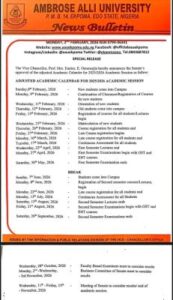
The Senate of the University, under the proactive leadership of the Vice Chancellor, Prof. Mrs. Eunice E. Omonzejie, has officially ratified an adjusted academic calendar for the 2025/2026 Academic Session. This announcement, formalized by the Registrar, Mrs. Oluwayomi O. Agbebaku, provides a strategic roadmap for all academic and administrative activities for the year.
Academic calendars are the heartbeat of any tertiary institution. They provide the necessary structure that allows students to plan their finances, study schedules, and extracurricular commitments. For the 2025/2026 session, the University has designed a balanced schedule that prioritizes both rigorous instruction and administrative efficiency. This 2000-word analysis breaks down every phase of the session to ensure every student and faculty member is “guided accordingly.”
Phase I: The Dawn of the Session – Resumption and Orientation
The first few weeks of any academic year are often the most chaotic. To mitigate this, the University has staggered the resumption dates between freshers and returning students.
New Student Arrival and Integration
-
Sunday, 8th February 2026: Campus gates officially open for new students.
-
Monday, 9th February 2026: The continuation of physical clearance and online course registration. This is a critical window for freshers to finalize their documentation before lectures begin.
-
Wednesday, 11th February 2026: Orientation for New Students. This is a mandatory event where the University introduces its rules, core values, and administrative heads.
Returning Student Resumption
-
Thursday, 12th February 2026: “Old” (returning) students are expected back on campus.
-
Friday, 13th February 2026: A pivotal date. Lectures begin for all levels, and course registration opens for the entire student body.
Phase II: First Semester – Registration and Academic Progression
The First Semester is characterized by a rapid transition from registration to intensive lectures. Students must be wary of the registration deadlines to avoid financial penalties.
Deadlines for Course Registration
The University operates a strict “No Registration, No Examination” policy.
-
Wednesday, 25th February 2026: Matriculation Ceremony. This marks the formal entry of new students into the University’s records.
-
Thursday, 26th February 2026: End of regular course registration.
-
Friday, 27th February 2026: Late Registration Begins. Students who miss the initial deadline will be required to pay a late entry fee.
-
Monday, 16th March 2026: The final closure of the registration portal. No additions or changes to course loads will be permitted after this date.
Assessments and Lectures
-
Tuesday, 17th March 2026: Continuous Assessment (CA). The CA is the first major academic hurdle. It typically accounts for 30% to 40% of the final grade.
-
Wednesday, 22nd April 2026: End of First Semester Lectures. Students are expected to have a minimum of 75% attendance to qualify for examinations.
Phase III: The First Semester Examination Cycle
Examinations are the ultimate test of a student’s grasp of the curriculum. The University has allocated five weeks for this process.
-
Monday, 27th April 2026: First Semester Examinations begin. As is tradition, the cycle starts with General Studies (GST) and Entrepreneurship (ENT) courses. These are large-scale, often CBT-based exams that involve students from across all faculties.
-
Saturday, 30th May 2026: Conclusion of First Semester Examinations.
-
BREAK: Following the exams, students are granted a brief respite to recharge before the Second Semester.
Phase IV: Second Semester – The Final Push
The Second Semester is often shorter and more intensive as departments race toward completing their curricula before the end of the session.
Resumption and Registration
-
Sunday, 7th June 2026: Resumption for the Second Semester.
-
Monday, 8th June 2026: Lectures and course registration begin simultaneously.
-
Monday, 22nd June 2026: Late registration for the Second Semester closes. This is a much tighter window than the First Semester.
Academic Milestones
-
Monday, 13th July 2026: Second Semester Continuous Assessment.
-
Saturday, 15th August 2026: End of Second Semester Lectures.
-
Friday, 21st August 2026: Commencement of Second Semester Examinations, again led by GST and ENT courses.
-
Saturday, 26th September 2026: The final day of examinations for the 2025/2026 academic year.
Phase V: Post-Examination Administrative Processes
While students depart for their long vacation, the University’s administrative machinery enters its most intensive phase: the processing and approval of results.
| Date | Activity |
| 28th October 2026 | Faculty Board of Examiners meets to consider and approve results at the faculty level. |
| 2nd – 3rd Nov 2026 | The Business Committee of Senate (BCS) meets to review and standardize results across the University. |
| 11th – 13th Nov 2026 | Senate Meeting. The final approval of results, graduation lists, and the formal closure of the session. |
Strategic Advice for Success Under the New Calendar
To navigate this calendar effectively, students should adopt several key strategies:
1. Priority Registration
Do not wait for the “Late Registration” window. Late registration is not just a financial burden; it often leads to missing out on departmental updates and CA schedules. Aim to be fully registered by February 26th.
2. Focus on GST and ENT Courses
Since these examinations start the cycle in both semesters, students should ensure their study materials for these courses are ready well in advance. These subjects are foundational and failing them can often lead to “carry-over” issues that complicate graduation.
3. Monitor Continuous Assessment Dates
With CA dates set for March 17th (1st Sem) and July 13th (2nd Sem), students have clear milestones to aim for. Treat these dates as “mini-exams” to take the pressure off the final examinations.
4. Financial Planning
Parents and guardians should note the resumption and registration dates. Ensuring that fees are paid by early February will ensure that students can participate in the orientation and clearance processes without stress.
Conclusion: A Commitment to Academic Excellence
The adjusted 2025/2026 Academic Calendar is a testament to the University’s commitment to delivering a stable and predictable educational environment. By following this schedule, the University Management ensures that students graduate on time and that the integrity of the degree is maintained through a structured learning process.
All students, staff, and stakeholders are encouraged to print or save this calendar and refer to it frequently. As the Registrar, Mrs. Oluwayomi O. Agbebaku, stated: “Please, be guided accordingly.”
Join Our Community
Stay connected with the latest updates, exclusive content, and be part of our growing community!
Latest Posts
View AllUNIVERSITY OF BENIN (UNIBEN) ISSUES IMPORTANT NOTICE TO NEWLY ADMITTED STUDENTS ON CLEARANCE EXERCISE FOR 2025/2026 ACADEMIC SESSION

The Management of the University has issued a decisive and far-reaching directive concerning the ongoing clearance process for the 2025/2026 Academic Session. This intervention, sanctioned by the Vice-Chancellor, Prof. Edoba B. Omoregie, SAN, addresses systemic friction between institutional admission offers and external regulatory pressures that have recently impeded the registration of fresh students.
In a robust defense of academic autonomy and student rights, the University has clarified that no candidate who meets the stipulated academic requirements will be denied the opportunity to enroll in their admitted programme. This analysis explores the administrative, legal, and educational implications of this directive, particularly as it pertains to the Faculty of Optometry and the broader landscape of Nigerian higher education.
The Core Conflict: Admission Quotas vs. Professional Regulation
At the heart of the current crisis is a reported bottleneck in the Faculty of Optometry. Students who had successfully secured provisional admission—having met the rigorous benchmarks of the Unified Tertiary Matriculation Examination (UTME) and the University’s post-UTME screening—found themselves barred from completing their clearance.
The purported reason for these denials was a “limited quota” allegedly imposed by an external professional body. This is a common point of friction in professional courses such as Medicine, Law, Engineering, and Optometry, where professional councils often attempt to cap student intake based on their assessment of available clinical or technical facilities.
The University’s Legal Stand
The University’s response is a masterclass in administrative law and institutional hierarchy. By explicitly stating that the University is not directly responsible to any professional body but to the National Universities Commission (NUC) and the Federal Ministry of Education (FME), the Management is reaffirming the statutory framework of Nigerian education.
Under the laws governing federal and state universities, the NUC is the sole statutory body empowered to set “Minimum Academic Standards” and approve the “carrying capacity” of departments. While professional bodies provide essential accreditation for professional practice, they do not hold the legal authority to override a University’s admission list once the NUC has cleared the programme’s capacity.
Directives for Affected Students: Reclaiming the Admission Offer
The University has issued an immediate call to action for all affected candidates. This is not merely a suggestion but a formal administrative recall designed to rectify the “contrary directives” issued by lower-level clearance officers.
Who Should Report Back?
-
Optometry Candidates: Students who were previously told the quota was full or that they could not be cleared for the programme.
-
General Applicants: Any student in any other faculty who encountered administrative resistance not based on academic qualifications.
The Verification Procedure
Affected students are requested to report back to their respective Faculties and Clearance Officers. To ensure a smooth process this time, students should have the following documents ready:
-
Original JAMB Admission Letter.
-
Original O’Level Result(s) (verified).
-
Evidence of meeting the specific departmental cut-off mark for the 2025/2026 session.
-
University Post-UTME result slip.
The Role of University Leadership: Prof. Edoba B. Omoregie, SAN
The involvement of the Vice-Chancellor, Prof. Edoba B. Omoregie, SAN, adds significant legal weight to this directive. As a Senior Advocate of Nigeria (SAN), Prof. Omoregie’s interpretation of the university’s mandate is rooted in constitutional and administrative law.
His leadership emphasizes that a “Provisional Admission” is a social contract between the institution and the student. Once the student satisfies the academic conditions attached to that offer, the university is legally and morally bound to honor it. By reiterating that “no candidate duly offered admission will be denied clearance,” the VC is protecting the University’s reputation from charges of arbitrariness.
Administrative Compliance: Instructions to Deans and Clearance Officers
The directive serves as a stern warning to internal administrative staff. In many cases, clearance difficulties arise because Faculty Officers or Deans may feel pressured by professional bodies to limit numbers to ensure easier accreditation in the future.
The Management has now eliminated this ambiguity. Deans and Clearance Officers are mandated to:
-
Cease the Denial of Clearance: Any officer found to be turning away qualified students based on “external quotas” will be in direct violation of the VC’s directive.
-
Prioritize Academic Merit: The only valid reason for denying clearance is a “failure to meet the minimum entry academic requirements” (e.g., wrong subject combination or insufficient O’Level credits).
-
Expedite the Process: Given the time already lost to these difficulties, officers are expected to work “as promptly as possible” to integrate these students into the current academic session.
Protecting the Sanctity of the Admission Process
The University’s stance has broader implications for the Nigerian educational sector. When professional bodies unilaterally cut quotas after admissions have been concluded, it creates significant psychological and financial trauma for students and their families.
Impact on Students
Students often spend years preparing for specialized courses. Being denied clearance at the final stage—after paying acceptance fees or making housing arrangements—can lead to “academic displacement.” The University’s refusal to comply with these external pressures ensures that merit remains the primary currency of the institution.
The NUC-University-Professional Body Nexus
This situation highlights the need for better synchronization between the NUC (which approves the numbers) and professional bodies (which oversee the practice). The University’s directive forces a conversation on the “carrying capacity” of the Faculty of Optometry. If the University has invested in the facilities required to train a specific number of students, the professional body must align its practicing quotas with the NUC’s academic approval.
Guidelines for Students Returning for Clearance
To avoid the “difficulties being experienced” in previous weeks, students returning to their faculties should follow this structured approach:
-
Step 1: Document Audit: Ensure every single requirement listed on your admission notification is met. If there is a discrepancy in your age, state of origin, or O’Level grades, the university’s “minimum entry requirement” clause will still apply.
-
Step 2: Escalation Path: If a Clearance Officer still refuses to process your documents despite this new directive, students are encouraged to escalate the matter to the Dean of Student Affairs or the Office of the Registrar.
-
Step 3: Financial Regularization: Once clearance is granted, proceed immediately with the payment of school fees and course registration on the university portal. This “locks in” your studentship.
Conclusion: A Victory for Educational Integrity
The 2025/2026 Academic Session is set to be a defining one for the University. By standing firm against external pressures that threaten to disenfranchise qualified students, the University Management has reinforced the values of fairness and institutional autonomy.
The message is clear: The University belongs to the students who earn their place through hard work and academic excellence. To the students of the Faculty of Optometry and others who faced these hurdles—the gates are open. Report back to your faculties, complete your clearance, and begin your journey toward your professional goals.
Join Our Community
Stay connected with the latest updates, exclusive content, and be part of our growing community!
Latest Posts
View AllBAYELSA MEDICAL UNIVERSITY (BMU) ANNOUNCES 7TH MATRICULATION CEREMONY
The Management of Bayelsa Medical University (BMU), Yenagoa, has reached a significant milestone in its 2025/2026 academic calendar. The Vice-Chancellor, Prof. Dimie Ogoina, acting on behalf of the Governing Council, Senate, and the entire university community, has officially announced the institution’s 7th Matriculation Ceremony.
This event serves as the formal “rite of passage” for the newest cohort of undergraduate students who have successfully navigated the rigorous admission process of one of Nigeria’s premier specialized medical institutions. Beyond the festivities, the ceremony is a solemn administrative and legal requirement that transforms applicants into bonafide students of the university.
Ceremony Details and Logistics
The university has meticulously planned the event to reflect its high standards of discipline and excellence.
-
Date: Saturday, February 7th, 2026
-
Time: 9:30 AM (Prompt)
-
Venue: BMU Rooftop Auditorium, Imgbi Road, Amarata, Yenagoa, Bayelsa State.
The choice of the BMU Rooftop Auditorium offers a scenic and professional backdrop for the induction. Due to the high-profile nature of the ceremony and the expected attendance of state officials, academic luminaries, and families, the university management has stressed the importance of punctuality. All guests and matriculating students are expected to be seated by 9:30 AM to allow for the formal academic procession of the Vice-Chancellor and the University Senate.
The Significance of the Matriculation Oath
At Bayelsa Medical University, matriculation is more than a photo opportunity; it is the moment when the Matriculation Oath is administered. In the specialized field of medical sciences, this oath carries additional weight. It represents the student’s first commitment to the ethical standards, academic rigor, and professional integrity required in the healthcare sector.
By taking the oath, fresh students officially receive the full rights and privileges of the university. This includes:
-
Academic Recognition: The official entry of the student’s name into the University Matricula (Register).
-
Legal Studentship: Eligibility for the National Universities Commission (NUC) and JAMB final mobilization lists.
-
Institutional Protection: Access to the university’s specialized medical laboratories, clinical training facilities, and digital research portals.
Administrative Requirements for Fresh Students
To participate in the 7th Matriculation Ceremony, fresh students must ensure they have completed the following prerequisites:
I. Academic Clearance and Registration
Only students who have been fully cleared by the Admissions Office and have successfully completed their online course registration for the first semester are eligible for matriculation. This process ensures that every student being inducted meets the minimum entry requirements set by the NUC and relevant professional bodies like the Medical and Dental Council of Nigeria (MDCN).
II. Gown Collection and Regalia
The academic gown is a symbol of belonging to the scholarly community. Students are directed to visit their respective Faculty Officers for the collection of academic gowns.
-
Verification: Usually, a receipt of school fees payment and a small gown hire fee are required for collection.
-
Maintenance: Students are responsible for the safe-keeping of the regalia and must return it by the specified deadline (typically 48 hours after the ceremony) to avoid late-return penalties.
Prof. Dimie Ogoina’s Vision for the 2025/2026 Cohort
The Vice-Chancellor, Prof. Dimie Ogoina—a globally recognized expert in infectious diseases—continues to steer BMU toward becoming a world-class center for medical education and research. Under his leadership, the university has expanded its clinical partnerships and upgraded its simulation labs.
The 7th Matriculation Ceremony serves as a platform for the Vice-Chancellor to address the new students directly. His address traditionally focuses on the “BMU Standard,” emphasizing that being a medical student is a 24-hour responsibility. Students are encouraged to embrace the institution’s core values of discipline, empathy, and technical proficiency from their very first day as matriculated scholars.
Information for Parents and Guests
BMU acknowledges the vital role that parents and guardians play in the academic success of their wards. The university has made the following arrangements for guests:
-
Security: Ample security personnel will be on-site to manage traffic flow along Imgbi Road and ensure a safe environment within the campus.
-
Photography: While the university encourages the celebration of this milestone, guests are requested to remain in designated areas during the academic procession and the administration of the oath to maintain the solemnity of the event.
-
Reception: Following the formal ceremony, families are permitted to hold small, orderly receptions in designated zones around the campus.
The Path Ahead: Post-Matriculation Realities
Once the ceremony concludes, the 2025/2026 academic session moves into high gear. Fresh students are reminded that matriculation marks the end of the “honeymoon phase.” Immediately following the event:
-
Identity Cards: Students will use their signed matriculation forms to process their permanent Student ID cards.
-
Continuous Assessments (CA): Lectures will continue in full force, leading up to the mid-semester tests.
-
Clinical Rotations: For those in clinical years, the matriculation reinforces the professional conduct required when interacting with patients in teaching hospitals.
Conclusion: A New Chapter in Yenagoa
The 7th Matriculation Ceremony of Bayelsa Medical University is a testament to the institution’s growing reputation as a hub for health education in the Niger Delta. For the fresh students, the walk into the Rooftop Auditorium on February 7th is the first step toward a career of saving lives and advancing medical science.
The University Management invites the general public to share in this joyous occasion. As these fresh students “march to excellence,” they do so with the full support of a university dedicated to producing the next generation of global health leaders.
Join Our Community
Stay connected with the latest updates, exclusive content, and be part of our growing community!
Latest Posts
View AllNORTHWEST UNIVERSITY, SOKOTO IMPOSES LATE REGISTRATION FEE FOR 2025/2026 ACADEMIC SESSION

The Management of Northwest University, Sokoto, has issued a critical administrative directive regarding the finalization of student enrollment for the 2025/2026 Academic Session. In a formal notice emanating from the Office of the Bursar, the university confirmed that while the standard, penalty-free registration window has officially closed, a “concessionary grace period” has been established.
This move is a dual-purpose administrative strategy: it provides a lifeline for students who faced genuine hurdles during the regular registration cycle, while simultaneously reinforcing the university’s commitment to a disciplined and predictable academic calendar. However, this concession comes with a stringent daily-accruing financial penalty, a policy designed to discourage further delays and ensure that the institution can finalize its resource allocation for the semester.
The Mechanics of the Daily Penalty System
Unlike many institutions that charge a flat “Late Registration Fee,” Northwest University, Sokoto, has adopted a time-sensitive penalty model. This approach is increasingly common in modern Nigerian tertiary institutions to combat the culture of “last-minute” registration that often disrupts data processing and examination planning.
1. The ₦1,000 Per Day Accumulation
Effective from Monday, 2nd February 2026, any student who has not completed their online and physical registration formalities is liable for a fee of One Thousand Naira (₦1,000.00) for every 24-hour period that elapses before their registration is finalized.
-
The Trigger Date: Monday, 2nd February 2026.
-
The Accumulation Logic: The penalty is not a one-time charge but is cumulative. For example, a student who completes their registration on February 12th will face a penalty of ₦10,000 in addition to their standard tuition and levies.
-
Finality of Payment: The registration is only considered “validated” once the late fee is paid alongside the base registration charges.
Administrative Justification for the Policy
The Office of the Bursar has emphasized that these measures, though perceived as stern, are necessary for the operational health of Northwest University. Timely registration is the foundation upon which several critical university functions rest:
A. Resource Allocation and Classroom Management
The university uses registration data to determine the number of students in each course. This data influences the assignment of lecture halls, the printing of instructional materials, and the recruitment of adjunct facilitators where student-to-teacher ratios exceed National Universities Commission (NUC) standards.
B. Continuous Assessment (CA) and Examination Eligibility
In the digital age, a student’s eligibility for Continuous Assessment is often tied to their presence on the Management Information System (MIS). Unregistered students cannot be assigned grades for tests or laboratory practicals because their names do not exist in the official departmental “Mark Sheets.”
C. Security and Institutional Identity
Registration is the process by which a student’s identity is verified for the academic year. This includes the issuance of updated student ID cards, which are mandatory for accessing the library, medical center, and secure campus zones.
Conditions and Potential Sanctions
The university management has been explicit about the risks associated with ignoring this final grace period. Beyond the escalating financial cost, students who remain unregistered face “further sanctions.”
-
Denial of Access to Lectures: Instructors and Faculty Officers have been directed to verify the registration status of students attending lectures. Those without a valid Course Registration Slip for the 2025/2026 session may be asked to leave the lecture halls.
-
Barring from Academic Activities: This includes access to specialized laboratories, workshops, and the university’s digital learning portals.
-
Loss of Semester: In extreme cases, if a student fails to register within the grace period, the university may declare their admission “forfeited” for the year or mandate a “Suspension of Studies” (deference), requiring the student to wait until the next academic session.
Procedure for Completing Late Registration
To avoid further escalation of the daily penalty, students are advised to follow this structured recovery path:
Step 1: Immediate Financial Settlement
Students must log in to the university’s approved payment portal to generate a Remita Retrieval Reference (RRR) or its equivalent. It is vital to use only the university’s approved payment channels. Paying through unauthorized third parties or personal POS accounts will not result in a validated registration and may lead to a total loss of funds.
Step 2: Verification of Late Fees
Before final submission, the portal will calculate the total number of days delayed since February 2nd and append the corresponding late fee to the total balance. Students must ensure that this total is fully settled.
Step 3: Course Selection and Submission
Once the financial block is cleared, students should proceed to select their core and elective courses. This must be done in consultation with the Departmental Level Coordinator to ensure that the student is registering for the correct credit load as specified in the Faculty Handbook.
Step 4: Printing and Physical Clearance
The process is only complete when the student prints their Course Registration Form and presents it to the Faculty Office for endorsement. This physical copy serves as a “shield” against being barred from lectures or assessments.
Advice for Parents, Guardians, and Students
The Northwest University Management recognizes the economic realities of 2026, yet it maintains that administrative order is paramount.
-
For Students: The math is simple—every day of procrastination costs ₦1,000. If you are facing technical issues with the portal, do not simply wait; visit the University ICT Center immediately to document your attempt to register. Documentation can sometimes be used to appeal for a waiver if the delay was caused by system failure rather than student negligence.
-
For Parents: Ensure that the funds provided for registration are utilized immediately. Many students fall into the “Late Registration Trap” by diverting fee money into personal ventures, hoping to pay it back later, only to be caught by the escalating daily penalty.
Conclusion: A Final Call to Action
The “grace period” offered by the Office of the Bursar is a window of mercy that is rapidly closing. As of February 2026, the priority of Northwest University, Sokoto, is to transition fully into the teaching and research phase of the session. Students who remain outside the registration fence are not just risking money—they are risking their academic standing and their future graduation timeline.
The university urges all affected individuals to act with the utmost urgency. The daily ₦1,000 penalty is not meant to generate revenue, but to serve as a constant reminder that in the professional world—and in academia—time is a resource that carries a significant price tag.
Join Our Community
Stay connected with the latest updates, exclusive content, and be part of our growing community!